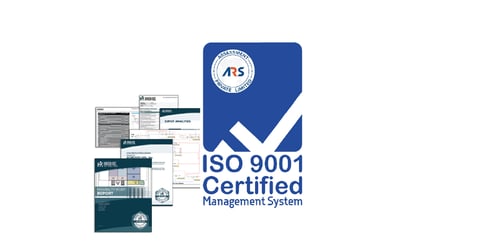
How does certification to three ISO standards protect a mission-critical facility project? For Hansen-Rice, Inc. (HRI) clients, it means every project operates within one audited, integrated management system, the Assured Delivery Program (ADP™), rather than a collection of separate programs and individual judgment calls. This article explores what ISO standards are and why meeting them ensures assured delivery for capital project owners.
Triple Certification at a Glance
Integrated Management System: HRI's ADP™
- Verified by accredited third-party auditors
- ISO 9001:2015 — Quality (Aug 2025)
- ISO 14001:2015 — Environmental (Jul 2026)
- ISO 45001:2018 — Health & Safety (Jul 2026)
Proof vs. Marketing: Why Does Certification Matter?
Every contractor you evaluate for your project will claim to be committed to quality. Most will say safety is a core value. Many now talk about environmental responsibility. These are reasonable criteria, but without an independent audit to a recognized standard, they are difficult to evaluate and verify.
Certification verifies the provider’s qualification statements and turns bluster into assurance. When a design-build contractor’s management system is certified to relevant ISO standards, an accredited third-party auditor has reviewed the documented processes, confirmed those processes are followed, and verified that the organization measures and improves its performance over time.
What are ISO Standards and “ISO Certification”?
Because they can be misrepresented or inappropriately claimed, it’s important to define what ISO standards are, what is certified, and what is not.
ISO standards are internationally recognized frameworks that define the requirements for a management system in a specific discipline, such as quality, environmental responsibility, or occupational health and safety. According to their website at www.iso.org, ISO has published over 25,000 international standards and other deliverables.
“ISO Certification,” however, is a frequently misunderstood misnomer. ISO itself does not certify anything or issue certifications; it publishes the standards. A certificate does not cover “items” (like a finished building, product, or piece of equipment). If you see “ISO Certified” on a washing machine, it’s probably mislabeled. Likewise, companies are not certified.
Rather, certification covers the process or system that supports and produces the item, for example, a management system with documented policies, procedures, and controls that govern how an organization plans and executes its work. Certification is earned through audits performed by accredited third-party certification bodies to meet specific standards.
The standards to which a provider’s processes and systems are certified largely depend on the type of business they are in and on their defined “Scope.” The Scope of the certification sets the parameters for its reach. For example, at Hansen-Rice, our three standards (for Quality, Environmental, and Occupational Health & Safety) were chosen for the value and risk-management assurance compliance provides to our clients. Our published “Scope” on all three certificates speaks to what we do and who we serve within the reach of that standard:
“An integrated service provider whose services include consulting, design, engineering, construction, and commissioning for clients that manufacture, warehouse, and distribute consumable and non-consumable products.”
Why Confirm “ISO Certified” Claims?
Any claim of certification should clearly state which ISO standard the provider’s process or system is certified to. This is vital to ensure they are certified to the standards that apply to the work being performed on your behalf. Always ask to see the certificate, confirm which standard applies, and verify that an accredited body issued it.
HRI’s certificates were issued by ARS, a certification body accredited by the United Accreditation Foundation (UAF). Per the standard’s requirements, ARS conducted a multi-stage audit to verify that HRI’s systems meet the applicable standard, employees follow the documented processes, and we conduct internal audits and management reviews to drive continuous improvement.
Easy to Verify
We encourage stakeholders responsible for evaluating capital project provider qualifications to verify claims of "certified" or "proven" processes before selecting their project team. Request a copy of any contractor's certificate and check their claims against the official record in the IAF CertSearch registry at iafcertsearch.org. At least, confirm which standard applies and that it is currently active. An inactive certificate indicates the system is no longer being maintained.
Why an Integrated Management System for Three Standards?
An Integrated Management System (IMS) extends certification beyond a single standard. Rather than maintaining separate, disconnected programs across multiple disciplines, an IMS unifies all three under a single, audited, and strengthened framework. That structure’s transparency, efficiencies, reliability, and accountability benefit owners throughout the full project lifecycle.
Hansen-Rice prioritized and earned certification in three standards within the ADP™ (contact HRI for current, valid copies of the certifications, or see sidebar):
ISO 9001:2015
Quality Management
ISO 9001 is the most widely adopted quality management system standard worldwide. It is the solid foundation on which many other ISO standards stand.
For a full-service consulting design-build contractor, certification to that standard means that the Quality Management System (processes for planning, designing, procuring, constructing, and commissioning a facility) is documented, consistently followed, and subject to ongoing review.
For owners, this translates to reduced variability. Project outcomes are less dependent on which individual team members are assigned and more grounded in a repeatable operating system. Value engineering and innovation are designed into the IMS. Team members are empowered to capture opportunities when they present themselves. And when problems arise, as they do on complex capital projects, a certified QMS provides a defined process for root cause analysis, corrective action, and further prevention.
ISO 14001:2015
Environmental Management
ISO 14001 requires an organization to identify the environmental aspects of its operations, set measurable objectives for reducing environmental impact, and demonstrate progress. Certification means the environmental management system has been audited. Writing a policy and filing it away does not pass an audit.
For owners in food and beverage, cold storage, and industrial manufacturing, environmental compliance is already an operational reality. A consultative design-build partner with a certified environmental management system reduces exposure during construction, supports your environmental reporting, and manages environmental risk systematically with documented accountability.
ISO 45001:2018
Occupational Health and Safety
ISO 45001 is the international standard for occupational health and safety management. It requires a systematic, proactive approach to hazard identification, risk assessment, and control through the hierarchy of controls. Certification means these practices have been independently audited.
Construction is an inherently high-risk environment. A management system certified to ISO 45001 means worker safety on your project is managed as a documented, auditable system rather than left to case-by-case decisions in the field. HRI’s Integrated Policy Statement puts it plainly: Safety is Priority One and the first consideration in every project we execute. “There is no job so important that it cannot be done...SAFELY!” For owners, this commitment directly affects project continuity, liability exposure, and the site's safety record.
What Does the Ideal System Include?
Certification only matters if the system guides behavior and improves outcomes. For example, HRI’s ADP™ is not a dusty binder on a shelf. It is a working set of prescriptive plans, procedures, and templates, each with a defined purpose, aligned with stage-gated decision points, and governed by a single audited framework applied across every phase of your project.
Ask your provider to show you examples of their standardized templates and auditing process that memorialize essential data and deliver controls for their certified processes. They should at least include items such as:
- An Owner’s Program to define and memorialize the project charter, goals, and objectives.
- Feasibility or capital project studies to develop scope, assumptions, pricing, and risk profiles.
- A Project Development Plan that guides the work through four phases (Discovery, Conceptual, Functional, and Operational), each culminating in a stage-gate review with you.
- A Basis of Design that records the criteria behind each engineering decision.
- A BIM Execution Plan that keeps every discipline working from one coordinated model, traceable from design through turnover.
- A Project Execution Plan that brings the three certified disciplines into one framework.
- The Environmental Control Plan that governs stormwater management, spill prevention, and waste tracking.
- The Project Safety Plan to govern hazard identification, job safety analyses, and toolbox talks.
- Procurement plans, ensuring commercial alignment with approval criteria.
- Standing templates for weekly owner meetings and monthly reviews.
- An Integrated Turnover Plan that governs commissioning, final inspections, client training, and delivery of operations and maintenance manuals.
- A documented warranty closeout process that carries accountability into your first years of operation.
Underneath all of it, the provider should be able to demonstrate the controlled procedures auditors examine: document control, risk management, corrective action, internal audits, and management review. For HRI, these close the loop, holding the system to all three standards and feeding lessons learned back into the ADP™.
Every document serves to ensure that the certainty promised in a proposal matches your experience at handover.
What is the IMS Bottom Line?
Some contractors are certified to one ISO standard. Fewer are certified to two. Among national consulting design-build firms serving cold storage, food processing, and industrial facilities, certification to all three standards under one integrated management system is very rare. HRI has done it, and the certificates are publicly verifiable. Rarer still is having the same team deliver while meeting those certified standards from the first planning conversation through final commissioning.
That integration matters because owners need continuity at each phase. Under HRI’s Bondable Advice™ principle, the same team that advises you on planning, site selection, and feasibility also designs, engineers, procures, builds, and commissions the facility, and remains accountable through final commissioning. There are no handoffs among separate consulting, design, and construction firms. The certified system travels with the project from start to finish.
Since 1983, HRI has delivered facility projects in 43 of 50 states for clients in refrigerated warehousing, food and beverage, industrial manufacturing, engineered wood, and consumer packaged goods. More than 75 percent of HRI’s work comes from repeat clients. Those numbers reflect what an integrated system looks like over time, across hundreds of projects.
What Should You Ask When You're Evaluating Contractors?
If your organization manages certified vendors, files ESG reports, or operates in a regulated environment, your contractor’s certifications directly affect your compliance picture. Before you select a firm, consider asking your prospective provider:
- Is your management system certified to an international standard, or is it an internal program your team developed? Who audited it, and is the certification body accredited?
- Can I verify your certificate through the IAF CertSearch registry?
- Does your certification cover quality only, or does it extend to environmental management and occupational health and safety?
- Do your quality, environmental, and OHS programs operate under one integrated framework, or as separate initiatives?
- Will the same team that advises me on planning also design and build the facility, or will I experience handoffs between firms?
The answers help clarify the difference between a company that describes best practices and one whose practices have been independently verified.
Ready to Learn More?
HRI’s Integrated Management System, the Assured Delivery Program (ADP)™, is certified to ISO 9001:2015, ISO 14001:2015, and ISO 45001:2018. Every project HRI delivers operates within that framework.
If you are planning a cold storage, food processing, automated warehousing, or industrial manufacturing facility, speak with a member of our team to discuss your next facility project or request HRI's capabilities statement at hansen-rice.com.
Related reading: Implementing a Quality Management System