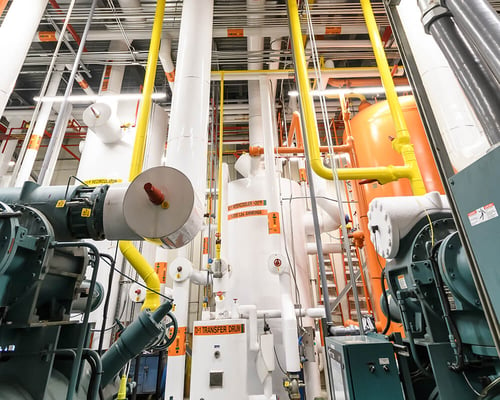
If your business depends on coolers, freezers, or refrigerated processing, an often-ignored or unheard-of federal law is now setting deadlines on equipment you already own. It is called the AIM Act (American Innovation and Manufacturing Act), passed in December 2020, and its operating rules have been in force since January 1, 2026.
This is the first article in our five-part series on the AIM Act. Here is what the law does, which dates matter, and why the facilities that handle it well will have decided to do so early.
|
AIM ACT QUICK REFERENCE In force now: 15+ lbs of covered HFC refrigerant triggers leak management, recordkeeping, and reporting. Next deadline: Jan. 1, 2027, for automatic leak detection on existing 1,500+ lb systems. Bottom line: The dates are set. Plan now or scramble later. |
What the AIM Act Does
The law works on two tracks. The first is supply: EPA is cutting the production and import of HFC refrigerants, the gases in most commercial cooling systems, by 85 percent by 2036. Less supply on a published schedule means rising prices on a published schedule. The next step-down, to 30% of baseline, occurs in 2029.
The second track is the one that reaches into your plant. Under EPA’s refrigerant management rules (40 CFR Part 84), any appliance holding 15 pounds or more of a covered HFC now carries federal obligations for leak management, recordkeeping, and reporting. Fifteen pounds is a low bar. A commercial walk-in clears it easily.
What Changed on January 1, 2026
For every in-scope system, the full refrigerant charge must be documented. Every time a technician adds refrigerant, the leak rate must be calculated. Cross the applicable threshold, 30 percent for industrial process refrigeration, 20 percent for commercial refrigeration, 10 percent for comfort cooling, and a repair clock starts: generally, 30 days to fix the leak and verify the repair held, with longer windows where a repair requires shutting down an industrial process. If a system can’t be fixed, you have one year to retrofit or retire it. Systems that leak 125 percent or more of their full charge in a year must be reported to the EPA by March 1 of the following year, and records must be kept for at least three years.
Build the leak-rate calculation into your work orders so the math runs whenever a tech adds gas. A binder on a shelf is where compliance goes to die.
The Deadline Six Months Out
Systems holding 1,500 pounds or more of HFC refrigerant in commercial and industrial process refrigeration must have automatic leak detection. New systems have required it since January 1, 2026. Existing systems must comply by January 1, 2027. That is a budget item, an installation, and a calibration program, and it belongs in this budget cycle. There is an upside: a properly calibrated detection system replaces the routine hand inspections on that equipment.
What the May 2026 Changes Did and Did Not Do
You may have seen headlines this spring about EPA easing HFC rules. That is true for equipment transition deadlines. In a final rule published May 26, 2026, EPA extended the deadline for cold storage warehouse systems to meet the strictest GWP limits from 2026 to January 1, 2032, with an interim 700-GWP limit in the meantime. For owners planning new systems, that is welcome breathing room.
What did not change: the leak repair, recordkeeping, detection, and reporting rules on equipment you already operate. Those took effect January 1, 2026, and remain fully in force. Do not stand down on a binding rule because a different one got easier.
The Fork in the Road
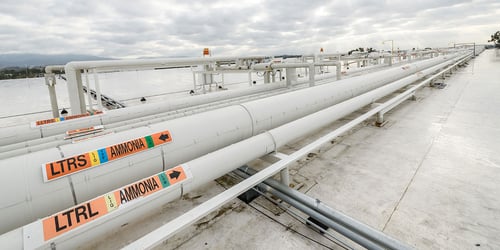
Every operator of large HFC systems is heading toward the same choice. Stay on HFCs and accept rising refrigerant costs, tightening service rules (from 2029, supermarket systems, refrigerated transport, and ice machines must be serviced with reclaimed refrigerant), and a compliance program that never ends. Or transition to a natural refrigerant, at an industrial scale, usually ammonia, which sits entirely outside the phasedown and costs less to run, but requires a serious process safety program once your charge reaches 10,000 pounds.
There is no path with zero rules. The real question is which set of rules fits your operation for the next decade, and whether you choose on your own timeline or a regulator’s.
Five Dates to Put on the Wall
|
Milestone |
What It Means |
|
|
Jan 1, 2026 |
Operating rules take effect |
Leak management, recordkeeping, and reporting apply to systems holding 15+ lbs of covered HFC. |
|
Jan 1, 2027 |
Automatic leak detection deadline |
Existing systems at 1,500+ lbs must have automatic leak detection installed. |
|
Mar 1, yearly |
Chronic leak reporting |
Systems leaking 125% or more of full charge in a year must be reported to EPA. |
|
Jan 1, 2029 |
Reclaimed refrigerant requirement |
Supermarket systems, refrigerated transport, and ice machines must be serviced with reclaimed refrigerant. |
|
2036 |
Phasedown target |
HFC production and import cut 85% from baseline. |
The Bottom Line
The AIM Act rewards facilities that know what they own and can prove how they run it. It exposes those who can’t. Whether this becomes a footnote or a fire drill at your facility was mostly decided before the law arrived, by the discipline already in place. The good news: discipline can be built, and the dates are published.
Start with a list of every refrigerant system you own. In the rest of this series, we cover how facility leaders, compliance officers, operators, and executives should each approach what comes next.
Hansen-Rice helps cold storage and food facilities plan, build, and manage refrigeration and ammonia PSM programs across the full lifecycle. Speak with an expert at hansen-rice.com/contact-hri, or start with our complimentary PSM Program Health Checklist.
This article is general education, not legal advice. The underlying rules come from the EPA (AIM Act, 40 CFR Part 84) and OSHA (PSM, 29 CFR 1910.119). Confirm how they apply to your own equipment and operations.
Sources
- U.S. EPA: Background on HFCs and the AIM Act
- U.S. EPA: Frequent Questions on the Phasedown of Hydrofluorocarbons
- U.S. EPA: Leak Repair Requirements, Emissions Reduction and Reclamation Program (Fact Sheet, Jan. 2026)
- U.S. EPA: Automatic Leak Detection, Emissions Reduction and Reclamation Program (Fact Sheet, Jan. 2026)
- U.S. EPA: Emissions Reduction and Reclamation Program (Fact Sheet, Sept. 2024)
- eCFR: 40 CFR § 84.106, Leak Repair
- U.S. EPA: Technology Transitions Reconsideration (Final Rule Fact Sheet, May 2026)
- Federal Register: Phasedown of HFCs: Reconsideration of Certain Regulatory Requirements (May 26, 2026)
- OSHA: 29 CFR 1910.119, Process Safety Management of Highly Hazardous Chemicals