When a new federal refrigerant rule arrives, it does not land on the CEO or compliance office first. It lands on the facility team, because the facility team is the only group that can answer the first question everyone else will ask:
What do we actually own?
On most campuses, no one has a complete, up-to-date list of every refrigerant system and its charge. Under the AIM Act, that list is no longer a nice-to-have. It is the foundation of every compliance obligation, every budget number, and every strategic decision that follows. This is the second article in our AIM Act series, which covers how to build that one deliverable.
|
AIM ACT QUICK REFERENCE Compliance threshold: 15+ lbs of covered HFC refrigerant triggers immediate leak-rate tracking and full-charge recordkeeping Automatic leak detection deadline: January 1, 2027, for existing systems at 1,500+ lbs. Governing regulations: EPA (AIM Act, 40 CFR Part 84) and OSHA (PSM, 29 CFR 1910.119). |
Why the Inventory Is the Whole Ballgame
Since January 1, 2026, every appliance that holds 15 pounds or more of a covered HFC refrigerant has leak-management and recordkeeping obligations. You cannot calculate a leak rate without knowing the full charge. You cannot document the full charge on a system you have not logged. Every downstream requirement traces back to the inventory, which means every gap in the inventory is a compliance gap waiting to be found by someone else.
The same list answers the questions coming from above. When leadership asks about exposure, when compliance asks where the records live, when finance asks what the transition will cost, the answer starts with the same document.
Where the Exposure Hides
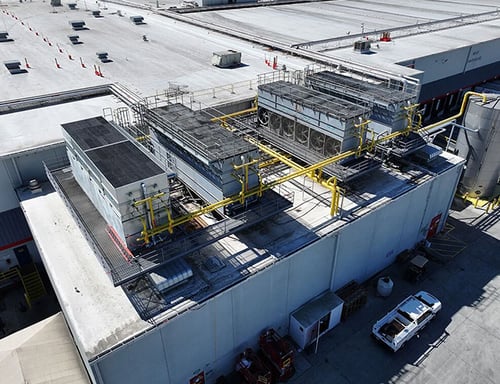
The big process systems are not the problem. You know those cold. The exposure hides in the peripherals: comfort cooling, server and electrical room units, lab chillers, dock units, the packaged rooftop system on the building you inherited two reorgs ago. These units run on HFCs. They cross the 15-pound threshold more often than most people guess, and they are scattered across buildings and budget lines. They fall off the radar precisely because they are not the process you think about every day, which is exactly where an inventory gap becomes a finding.
Walk the buildings the rest of the organization forgets: the cafeteria, the lab, the IT closet, the spare warehouse. That is where the unlogged units live.
|
Deadline |
Equipment / Assets Affected |
Core Requirement |
|
Now |
Systems holding 15 lbs or more of covered HFCs |
Leak-rate tracking and full-charge documentation should already be in place. |
|
January 1, 2027 |
Existing commercial and industrial process systems at 1,500 lbs or more |
Automatic leak detection required. Price, order, and schedule installation for this budget cycle. |
|
January 1, 2029 |
Supermarket systems, refrigerated transport, ice machines |
Must be serviced with reclaimed refrigerant;HFC supply steps down again (to 30% of baseline). Service costs on old systems climb from here. |
|
January 1, 2032 |
New cold storage warehouse systems (per May 2026 EPA extension) |
Must meet strictest GWP limits; interim 700-GWP limit applies until then. |
Note: the 2032 extension changes new-equipment planning. It changes nothing about the operating rules on what you run today.
If You Already Run a Tight Ship
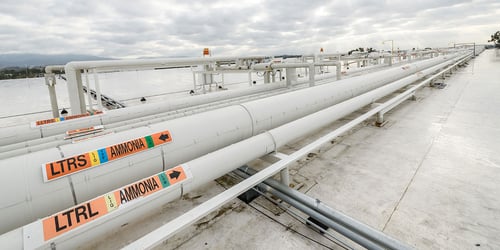
A facility with a current equipment register, scheduled PM, and a CMMS that reflects reality will find AIM an extension of existing discipline rather than a new program. And if your site runs an ammonia PSM program, you have a budgetary and operational head start: the mechanical integrity inspections, records discipline, and change control you already fund on the process side are the same capabilities AIM demands on the HFC side. You are stretching a funded program, not standing up a new one.
The reverse holds too. A campus that cannot produce a clean asset list cannot produce clean AIM records, and a weakness like that never stays in one system. The AIM Act did not create a new job. It imposed a federal deadline on the asset discipline that was always supposed to be in place.
The Bottom Line
Three moves this quarter:
- Build the campus-wide refrigerant inventory: every system, every building, refrigerant type, and charge.
-
Flag the deadlines against it: the 15-pound rules now, the 1,500-pound detector requirement for January 2027.
-
Get the costs into the capital plan, detectors, likely retrofits, and a five-year stay-versus-transition picture, before budget season closes rather than after.
The facility leader who can pull up a current inventory when leadership asks about “this AIM thing” is the most prepared person in the building. Hansen-Rice can help you scope the inventory, detection requirements, and transition economics as a single piece of work. Speak with an expert at hansen-rice.com/contact-hri.
This article is general education, not legal advice. The underlying rules come from the EPA (AIM Act, 40 CFR Part 84) and OSHA (PSM, 29 CFR 1910.119). Confirm how they apply to your own campus and equipment.
Sources
- U.S. EPA — Frequent Questions on the Phasedown of Hydrofluorocarbons. Step-down schedule: “2029–2033: 30 percent” of baseline; “85 percent … by 2036.”
- U.S. EPA — Leak Repair Requirements, Emissions Reduction and Reclamation Program (40 CFR Part 84), Fact Sheet, Jan. 2026. Applies to “appliances with a charge size of 15 pounds or more”; leak-rate calculation and full-charge documentation required.
- U.S. EPA — Automatic Leak Detection, Emissions Reduction and Reclamation Program, Fact Sheet, Jan. 2026. Existing systems (1,500+ lb full charge) “must install and use an ALD system by January 1, 2027.”
- U.S. EPA — Emissions Reduction and Reclamation Program, Fact Sheet, Sept. 2024. Reclaimed-HFC servicing (Jan. 1, 2029) for “supermarket systems, refrigerated transport, automatic commercial ice makers.”
- eCFR — 40 CFR § 84.106, Leak repair (codified EPA rule).
- U.S. EPA — Technology Transitions Reconsideration, Final Rule Fact Sheet, May 2026. Cold storage warehouses: interim 700-GWP limit “until January 1, 2032, and either 150 or 300 thereafter”; operating rules unchanged.
- Federal Register — Phasedown of HFCs: Reconsideration … Technology Transitions Provisions of the AIM Act, May 26, 2026.
- OSHA — 29 CFR 1910.119, Process Safety Management of Highly Hazardous Chemicals. Mechanical integrity, recordkeeping, and management-of-change disciplines; Appendix A lists Ammonia, Anhydrous at a 10,000-lb threshold quantity.